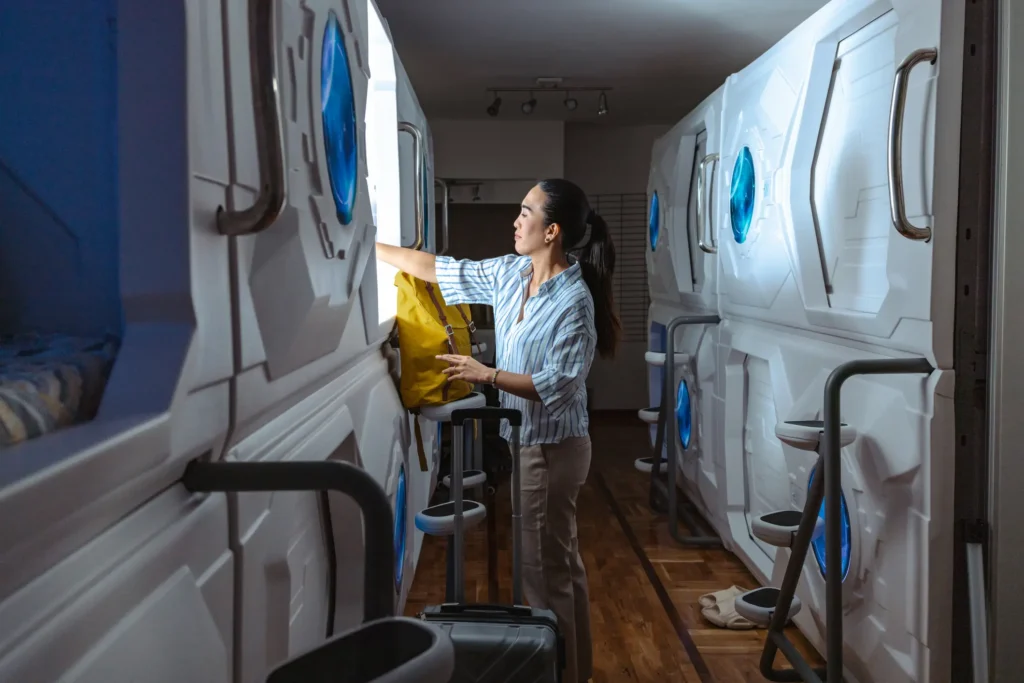
The room is fine. The silence is the problem. Most first nights alone do not go wrong because of anything that actually happens. The lock works. The neighborhood is not dangerous. The bed is not, in any objective sense, worse than the last one slept in at home. What tends to happen instead is quieter and harder to name: a first-time solo traveler checks into a hostel dorm or a small guesthouse in a city they have never seen, closes the door, sits down on the edge of the bed, and is hit by a wave of second-guessing so strong it can feel like a verdict on the entire trip. Should this have been booked at all. Is this what solo travel actually is. Was everyone back home right to raise an eyebrow.
None of that is a special personal failing, and none of it is unique to nervous or inexperienced travelers. According to Hostelworld’s 2025 State of Solo Travel report, 41 percent of solo travelers cite safety as a real worry going in, and for women the figure rises to 55 percent, compared with 18 percent of men. That is a lot of people carrying real apprehension into a first solo trip — and yet the same report finds that fewer than 2 percent of solo travelers say they lack the confidence to travel alone at all, and 63 percent of first-timers go on to plan another solo trip afterward. The nerves are common. They are also, overwhelmingly, temporary and survivable, which is a different claim than “everyone loves it immediately,” and a more useful one.
What the first night actually consists of. Strip away the drama and the first night alone tends to be made of four specific, ordinary-sounding anxieties, each worth naming because naming them shrinks them.
The first is simple unfamiliarity: an unfamiliar room, with unfamiliar sounds, in a layout the body has not yet mapped. Every creak and hallway footstep registers as information because the brain has no baseline yet for what is normal in this particular building. That sensitivity is not paranoia; it is exactly what any unfamiliar environment does to attention, and it fades once the space becomes known, usually within a night or two.
The second is a feeling of being watched or assessed — walking into a shared kitchen or common room solo and feeling like every existing group notices the new arrival. In practice, most of that scrutiny is imagined. People in hostels and guesthouses are, disproportionately, other travelers who arrived alone at some point themselves and are not devoting much attention to sizing up a newcomer.
The third is loneliness in its sharpest, least metabolized form — not the manageable, almost pleasant solitude that comes later in a trip, but the first-night version, which lands right when there is no routine yet to soften it. There is no familiar dinner, no default plan, nobody to check in with about how the day went. That gap is exactly where the mind tends to fill in worst-case narratives about the whole trip being a mistake.
The fourth is the most corrosive: full-blown second-guessing of the decision to travel at all. This is different from ordinary tiredness. It is the sense that solo travel itself was the wrong call, that everyone else seems to manage this more easily, that the sensible move would be to change the flight home. This one deserves to be named explicitly because it is the anxiety most likely to produce an actual bad decision — booking an early flight home, for instance — if it is not recognized for what it usually is: a first-night state, not a verdict.
What resolves on its own, and on what timeline. This is the part most anxious first-time travelers are never told with any specificity, and it matters because vague reassurance (“it gets better!”) is far less useful than a rough timeline. The unfamiliarity of the room and the building resolves almost immediately — usually within the first sleep cycle, since the brain stops treating the space as novel once it has spent unconscious hours in it. The self-consciousness about other travelers in shared spaces tends to fade within a day, often faster, once a single friendly exchange happens — even something as minor as a returned “where are you from?” in a hostel kitchen recalibrates the sense of being an outsider. The sharpest loneliness typically softens within 24 to 48 hours as a rhythm starts to form: a breakfast spot, a walking route, a couple of names attached to faces. None of that requires forcing anything; it is closer to what naturally accumulates once there has been enough time in the place to have any experience at all beyond the first night.
What does not reliably resolve on its own is the practical setup that either supports or undermines all of the above — and that is worth handling before arrival rather than hoping it sorts itself out.
Why fatigue makes everything worse, and why that matters more than it sounds. A first night alone is very often also the first night after a long flight, a delayed bus, or a border crossing that ran later than expected, and exhaustion has an outsized effect on how threatening a new place feels. Judgment calibrated on no sleep tends to catastrophize ordinary ambiguity — an unanswered message, an unfamiliar smell in the stairwell, a host who seems distracted at check-in — into evidence that something is wrong. Experienced solo travelers who spend time in communities built around exactly this problem, such as the long-running Solo Travel Society group referenced above, converge on a piece of advice that sounds almost too simple to be useful: do not make any decision about the trip, the destination, or the plan while running on no sleep. Eat something, however unremarkable, and get through one full sleep cycle before allowing the first-night anxiety to be treated as information rather than noise. Nearly every account of a rough first night includes some version of the same arc — dread in the evening, a full night’s sleep, and a markedly different, calmer read on the same city the following morning. That arc is common enough to be treated as the expected pattern rather than a lucky exception.
Choosing accommodation that does some of the social work automatically. The single highest-leverage decision for a first night alone is not itinerary planning; it is what kind of place gets booked to sleep in. A private room in a large anonymous hotel, arrived at late with no lobby life and no shared space, removes any low-effort chance of a first conversation. A hostel with an actual functioning common area, a guesthouse where the host serves breakfast at shared tables, or a smaller social property changes the math considerably, because it makes the first interaction passive rather than something that has to be initiated cold. Hostelworld’s research backs this pattern directly: 71 percent of solo travelers using the platform say they actively seek to meet other people while traveling, and 68 percent report forming connections through the platform that lasted beyond the trip itself. That is not evidence that hostels are inherently magical — it is evidence that a huge share of people are showing up wanting exactly the kind of easy social contact a common room provides, which means the room is very likely to contain other people in the same state of mind. The community built around this is not small, either: the Solo Travel Society, a long-running Facebook group for exactly this kind of traveler, has grown past 270,000 members swapping first-night stories and practical advice, which says something about how universal this specific worry is.
Arriving with a plan for the evening, not a blank page. An empty first evening is fertile ground for spiraling, simply because there is nothing to occupy the hours between arrival and sleep except the anxieties described above. The fix is not an elaborate itinerary — that belongs to a different conversation, and overplanning carries its own costs, covered at length in “Solo Travel Mistakes I Actually Made.” The fix is a single, low-stakes, already-decided plan for the first few hours: a walking loop past two or three landmarks within easy reach of the accommodation, a specific café or bakery picked out in advance, a hostel-organized dinner or walking tour if one is offered. The goal of that plan is not to see anything in particular. It is to remove the burden of deciding what to do while also nervous, tired, and disoriented, all at once. A more detailed framework for exactly this stretch — the first day and the choices that make it easier rather than harder — is covered in “What to Actually Do on Your First Solo Trip.”
A genuinely low-stakes first activity. The best first activity is boring on purpose. Nothing requiring booking ahead, nothing expensive enough to regret if it turns out to be underwhelming, nothing that demands energy or courage that has not built up yet. A short walk to get oriented, sitting somewhere with a view of a street or square and watching it for twenty minutes, or simply finding where breakfast will happen tomorrow — these count as real, completed activities, and completing something, however small, changes the emotional register of the evening from “adrift” to “in motion.” This matters more in some places than others; regions with strong existing traveler infrastructure and a culture of hospitality toward solo guests, of the kind described in “Solo Travel in the Balkans: What It’s Really Like,” make this first low-stakes outing considerably easier than places with less of that scaffolding, simply because there are more natural, unforced opportunities to be around other people without needing to perform extroversion.
What is worth addressing proactively rather than waiting out. A short list, deliberately: the accommodation choice itself, made before arrival, since it cannot be fixed at 11 p.m. on the first night. A charged phone with the address and a couple of emergency contacts saved offline, since technical failures compound anxiety disproportionately at the exact moment reassurance is most needed. And one person back home who knows the general plan and expects a check-in — not out of excessive caution, but because the mere existence of that check-in tends to quiet the second-guessing anxiety specifically, by making the trip feel witnessed rather than solitary in the more isolating sense.
None of this eliminates the first night. It does not need to. The evidence, both anecdotal and statistical, points the same direction: the discomfort is close to universal, it is not a signal to reverse course, and it is reliably shorter-lived than it feels at 9 p.m. on day one.
Sources
- State of Solo Travel 2025 — Hostelworld’s 2025 report, used for statistics on solo-traveler safety concerns (41% overall, 55% of women vs. 18% of men), confidence levels (under 2% lacking confidence to travel solo), repeat-travel intent (63% of first-timers plan another trip), and social behavior (71% actively seek to meet people, 68% form lasting connections).
- How to Conquer First-Day Solo Travel Anxiety — Solo Traveler World’s guidance on first-day/first-night nerves, including the “don’t make decisions while tired” advice and reference to the Solo Travel Society Facebook community (270,000+ members).