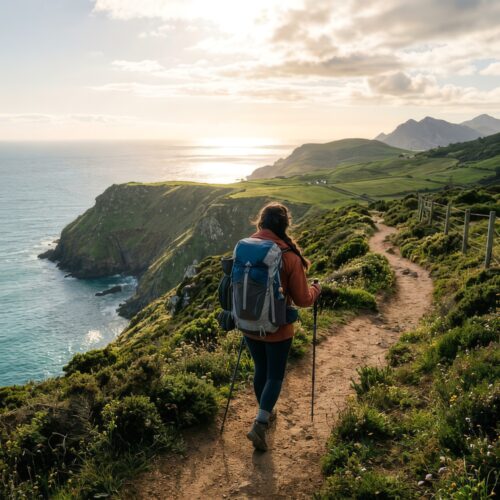
We have created the ultimate guide for your very first, totally new and exciting solo travel adventure.
Firstly, there is always a point, sometimes during the final stages of booking your ticket, other times after you have told others about your plans, where you start to feel both excited and panicked. What am I doing? I don’t know anyone here. What if something goes wrong?
But you are at that exact point now. And that’s fantastic. It means you’re on your way to doing something that really matters.
Traveling by yourself is one of the most fulfilling Things you’ll ever do for yourself. Not because it’s always easy. Or always comfortable. But because it isn’t. This guide will provide you with step-by-step advice and instructions on how to plan, prepare for, and survive your first-ever solo journey – and how to want to go on another one once it’s finished.
Why traveling solo is worth it
Let’s explore the reasons behind why you wanted to do this in the first place.
When you travel on your own, all of the decisions are yours. Where you eat, how much time you spend in each location, and whether you decide to cut your visit short to spend a couple of hours in a cafe watching the locals. All of these decisions are made independently. No negotiations. No compromises. No waiting for others to agree. You may not realize it until you experience it yourself.
In addition to the freedom you experience while traveling solo, it also helps you develop greater self-confidence. You learn how to assess risks and challenges and adapt to them. You learn to handle unexpected situations independently and grow in self-assurance with each challenge.
As one traveler put it: “The version of you that returns from a solo journey is generally different from the one that departed. Usually, better.”
The social aspect of solo travel? Contrary to popular belief, many solo travelers meet more people than group travelers. When you travel alone, you are more likely to engage with others. You are more approachable. You are more willing to be friendly and outgoing. We will discuss further how to maximize opportunities to interact with other people in this regard.
Choosing your first destination
While it is possible to plan a massive adventure for your first-ever trip, it is generally not recommended. Your objective is to gain confidence, not to stress yourself too much. Follow this simple formula when deciding which destination(s) to consider:
1. Look for destinations that are well-known among backpackers and travelers. Destinations such as Lisbon, Bangkok, Bali, Colombia’s Coffee Region, or major cities in Japan are extremely well-suited for first-time solo travelers because they offer reliable tourist infrastructure, many other travelers with whom you can communicate, and relatively easy transportation options regardless of your ability to speak the local language.
2. Consider the potential language barriers in your chosen destination. While you may still encounter occasional communication difficulties in destinations where English is widely spoken or where signs are written in the Roman alphabet, this significantly reduces the overall stress of navigating unfamiliar environments. Leave the most challenging aspects of international travel for future journeys.
3. Determine the duration of your trip. Seven to ten days is a reasonable timeframe for a first trip; long enough to allow you to establish a routine, yet short enough that if Things are not working out as planned, you can still reasonably anticipate returning home soon.
4. Go with your instinct rather than simply relying upon lists of top-ranked destinations. If there is one particular destination that has captured your imagination for years (and thus motivated you), that attraction is relevant. Incentive is a valuable asset when embarking on a solo journey.
Preparing ahead of time (pre-travel)
Proper pre-travel preparations help you turn a potentially stressful trip into an empowering opportunity for personal growth and development. While you do not need to create an elaborate itinerary detailing every minute, establishing several fundamental parameters before departure will help you execute your first-ever solo trip successfully.
Documentation/ administrative tasks
• a valid passport valid for at least six months beyond the date of your travel plans
• visa obtained if necessary (check early since obtaining a visa may require weeks) [link]
• travel insurance purchased before departure – more details provided below
• copies (physical and Digital) of all critical documentation, including your passport, travel insurance policy Documents, reservation confirmations for accommodations, and Emergency contact information stored in separate locations
• create a document listing the names and numbers of individuals that you wish to contact in case of an Emergency (save a copy offline on your mobile device)
Financial planning
• Inform your bank of your upcoming travels to prevent your debit/credit card from being flagged as suspicious activity while traveling abroad
• Be aware of the availability of ATMs at your destination – in some countries, cash remains the primary form of payment
• bring a modest quantity of local currency with you for initial expenses (e.g., taxi fare, SIM card purchase)
• establish a daily expenditure limit and track expenditures somewhat loosely; excessive spending can occur easily when every choice rests solely with you [link]
Accommodations
Make reservations for the first two nights at your destination before departing. Following the conclusion of your first two nights, you can then alter your arrangements according to circumstances dictated by the places that you eventually discover and the people that you meet along the way. As previously mentioned, hostels with social spaces or shared kitchens provide ideal venues for meeting fellow travelers – regardless of whether or not you prefer private space; hostels are designed to facilitate encounters between travelers.
Packing essentials for solo travelers
Lightweight Packing is essential when traveling on your own. Since you are responsible for transporting all of your belongings, having ample mobility is crucial.
A sample Packing list for solo travelers includes:
Important Documents & Money
* passport & photocopies
* insurance policy documentation
* two credit/debit cards (from different networks)
* small cash reserve in local currency
Technology & navigation
* an unlocked cell phone (for acquiring a local SIM card)
* power bank for charging devices on the go
* adapter for universal Use
* offline maps (Google Maps or maps.me) [link]
* headphones
Health & Safety
* basic first aid kit (band-aids, ibuprofen, antihistamines, rehydration tablets)
* prescription medication (with additional quantities available in case of unforeseen delays)
* sanitizer for hands & face mask
* sun protection
Clothing & gear
* multi-purpose Clothing items suitable for climate conditions
* smart casual outfit options for restaurants/bars/etc.
* comfortable walking shoes (wear-in before departure)
* packable rain jacket/lightweight waterproof layer
* lock for hostel locker
Comfort & sanity
* earplugs & sleep mask
* refillable water bottle
* physical book/ereader for travel days
Staying safe abroad
Safety concerns about traveling solo are typically what keep many people from taking advantage of this travel experience. The reality, however, is that Millions of people safely complete their travel experiences as solo travelers each year. Awareness and preparation are key.
1. Tell someone about your plans beforehand: provide your itinerary and estimated dates for contacting you with a trusted friend/family member. This allows them to monitor your whereabouts and contact authorities if necessary.
2. Remain connected: obtain a local SIM card immediately upon arriving at your destination and accessing information, making calls/texts/etc. It can greatly improve your ability to remain safe while traveling.
3. Listen to your instincts: if something feels off or unsafe about a particular situation/person/location/etc. – trust that feeling and remove yourself from it asap. You don’t owe anyone an explanation – and no worthwhile experience is worth putting yourself in harm’s way.
4. Protect valuables: keep important items hidden, not displayed. Use a padlock on luggage/backpacks/etc.; store your phone in a secure location (e.g., the front pocket); refrain from displaying expensive equipment/gadgets in crowded areas.
5. Locate nearest hospital/embassy: familiarize yourself with the nearest medical facility/Emergency Services/consular Services at your destination. You may not need it – but knowing can cost zero dollars/thirty seconds – and could be invaluable!
6. Avoid announcing that you are alone, especially when interacting with strangers in foreign settings/or staying in accommodations – there is no need to advertise this.
7. Drink responsibly: specifically, know your limits while in unfamiliar surroundings with little support system nearby.
8. Something goes wrong: Things will indeed go wrong at some point during your journey. Flight cancellations, lost/stolen passports, illness, and missing connections – these are but a few examples of incidents that can occur during travel. The main difference between turning what could’ve been a disaster into a memorable tale is nearly exclusively dependent on how you react/respond.
Lost/stolen passport: Immediately contact your embassy/consulate if you lose or have your passport stolen. Possessing photocopies of all critical Documents greatly facilitates this process.
Medical Emergency: understand how to reach your travel insurance provider’s 24-hour hotline before you need assistance. Many travel insurance companies include coverage for missed flights/trains/etc. Due to external factors affecting their operation.
Feeling unsafe: move to public space – hotel lobby/cafe/shop – make calls – trust your accommodation staff for help.
Running low on funds? Organizations like Western Union enable someone at home to quickly wire Money to you internationally via a wide variety of methods (in minutes). Just ensure you know about this method before you run low on funds.
It is true that resolving problems encountered during travel – including potentially stressful ones – is one of the greatest aspects of solo travel’s transformative nature. Each instance where you overcome adversity on the road enhances your confidence as an individual who understands they can resolve whatever obstacles arise.
You’re ready than you think.
The gap between desiring to travel alone and ultimately doing so rarely has anything to do with preparedness. Rather, it boils down to allowing yourself permission – permission to occupy space within the world at your discretion – permission to be uncomfortable – permission to figure it out as you go along.
You don’t need a perfectly structured itinerary. You don’t need proficiency in speaking the local language. And you certainly didn’t have to do this before!
All you needed to do was buy that plane ticket.
Begin small if you need to – One city, seven days maximum. See how it works out. Chances are, you’ll begin developing ideas for subsequent adventures.
Get moving! The globe is far less daunting than most perceive – and you possess capabilities far exceeding those you currently recognize within yourself.
Do you need additional assistance with planning your first-ever trip? View our articles related to selecting affordable travel insurance [link]; Packing lightweight for your first carry-on [link]; and locating inexpensive flights without sacrificing your integrity [link].